
‘What does this building need?’ The role of a trusted partner over point solutions
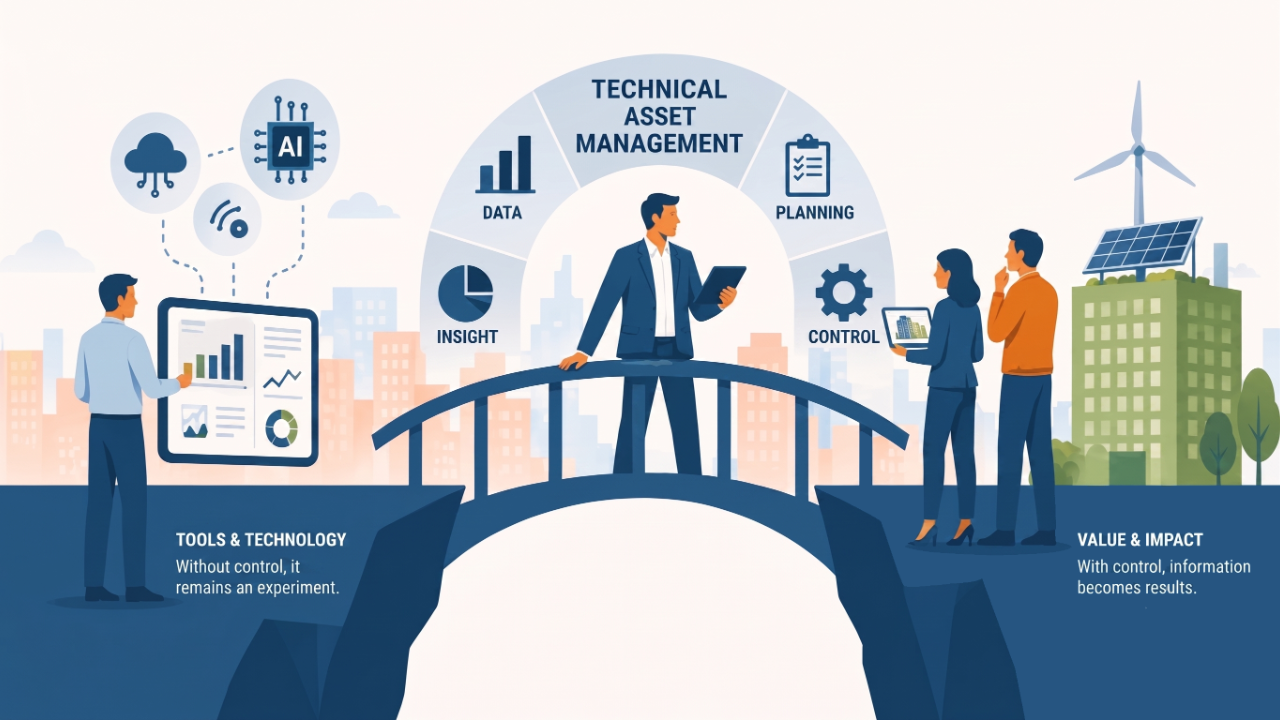
The market for building technology is saturated. Suppliers of building technology and sustainability solutions all have a compelling narrative and concrete promises regarding savings, insights, and returns. Real estate owners are constantly being approached with them. The problem is not the quality of the tools. It is that no one can independently explain which tool adds value in which building at which moment.
Anyone who chooses a tool without an overview starts with the offering rather than with the building. This leads to investments that are disconnected from operations. An EMS implemented without it being clear who is reading the data. An AI tool running on an information layer that is not yet in order. Sensing in parts of the building where the actual performance problems lie elsewhere. The question that is then asked—which tool suits us?—is a valid question, but one that is usually asked too early.
The right question
A trusted partner does not start with the offering, but with the building. What are the performance problems? Where is consumption that is unexplained? Which installations are at the end of their lifespan? What does the owner need to be able to manage, report, and substantiate? From that perspective, fueled by technical asset management and a reliable information layer, the request for advice from a tool provider is quite different. Not ‘what can your tool do?’ but ‘does your tool fit with what we already know?’ That is the conversation technical asset managers have daily with owners who are ready to invest, but do not know what to invest in.
What independence requires
A trusted partner has no vested interest in a specific point solution. That is a structural condition. The information layer and the TAM framework must be independent of which tool is placed on top of it, precisely because they form the basis from which that choice is made. Whoever sells that basis and simultaneously the tools running on it faces an inherent conflict. Management requires that the foundation remains independent.
That independence is exactly what owners lack in the current landscape. Not more information about tools, but a party that helps them ask the right questions before they invest. From tool to means
Owners who are now investing in governance through technical asset management and a reliable information layer are building a position from which tools can be deployed as a means, rather than an end. In this way, AI, sensing, a tenant community, or a new EMS become part of a strategy, not the strategy itself. In any case, the market offers no shortage of solutions. What is scarce, however, is the party that helps you determine which solution your building needs.
